In osteopathic practice, interdisciplinary medical, scientific and osteopathy-specific knowledge is applied in the diagnosis and treatment of patients. The aim of osteopathy is to support and optimise all aspects of health and healthy development. Osteopathic treatment may serve a preventive, therapeutic or supportive role.
Osteopaths analyse and assess a patient’s functional processes, applying generally accepted principles of osteopathy to individualised diagnosis and treatment. Fundamental osteopathic principles include:
- The functional unity of the body – the human body is a dynamic whole in which a change in one structure or function may affect the balance of the entire system.
- Self-regulatory mechanisms – the body possesses natural capacities for self-healing and strives to restore balance and homeostasis.
- The interrelationship between structure and function – at all levels of the body the structure and function are intrinsically interconnected.
Osteopathy is characterised by a patient-centred approach, focusing on the patient’s overall health rather than solely on the disease or condition currently present. A rigorous scientific approach and evidence-based practice are integral to treatment and the management of clinical cases.
In diagnosis, osteopaths use manual contact to assess mobility and function within the musculoskeletal system as well as other structures of the body. They identify functional changes that may affect health and undertake therapeutic interventions aimed at addressing them. Osteopathy seeks to stimulate the body’s innate mechanisms of self-regulation and self-healing, while also considering the interrelationships between the body, mind and spirit in the processes of health and disease.
The terms “osteopathy” and “osteopathic medicine” are sometimes used interchangeably. Osteopathy is an independent field of healthcare, while osteopaths may work collaboratively with practitioners from other medical disciplines. Its practice is grounded in a solid scientific foundation, including anatomy, physiology, embryology and other medical sciences.
Given the complexity of the human body, osteopathy employs different clinical models to understand patients’ physiological responses and plan best, individualised treatment. These include the biomechanical model, respiratory-circulatory model, neurological model, biopsychosocial model and bioenergetic model. These models determine the collection of diagnostic data and the interpretation of structural assessment findings in the context of the patient’s overall health. In clinical practice, practitioners generally combine different models according to the individual needs of the patient, their differential diagnosis, comorbidities and the response to treatment.
Osteopaths are trained to view the patient as a whole, taking into account their physical, psychological and emotional state. A highly developed sense of touch, the ability to observe complex systems and attentiveness to subtle functional changes are characteristic features of the osteopathic approach to healthcare.
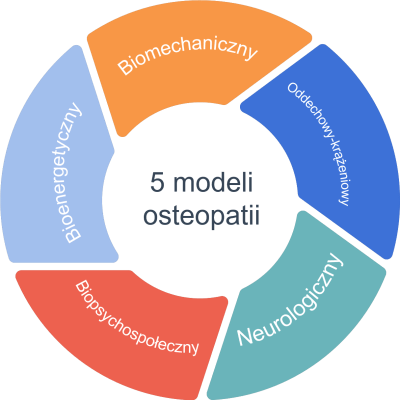
Osteopathic Models
Biomechanical
The biomechanical model views the body as an integration of somatic components that relate to one another as a mechanism of posture and balance. Stresses or imbalances within this mechanism may affect dynamic function, increase energy expenditure, alter proprioception (the sense of the relative position and movement of adjacent parts of the body), change joint structure, interfere with neurovascular function and alter metabolism.
Within this model, therapeutic approaches, including osteopathic manipulative techniques, are used to restore proper posture and balance and to promote the efficient use of musculoskeletal components.
Respiratory-Circulatory
The respiratory-circulatory model focuses on maintaining the extracellular and intracellular environment through the free delivery of oxygen and nutrients and the removal of cellular waste products. Tissue stress or other factors that disrupt the flow or circulation of any bodily fluid may affect tissue health. Within this model, therapeutic approaches, including osteopathic manipulative techniques, are used to address dysfunctions in respiratory mechanics, circulation and the flow of bodily fluids.
Neurological
The neurological model takes into account the influence of spinal facilitation, proprioceptive function, the autonomic nervous system and nociceptor activity (pain-sensitive fibers) on the functioning of the neuroendocrine-immune network. Of particular importance is the relationship between the somatic and visceral (autonomic) systems.
This model uses therapeutic approaches, including osteopathic manipulative techniques, to reduce mechanical stress, balance neural inputs, and reduce or eliminate nociceptive drive. It is sometimes referred to as the craniosacral model.
Biopsychosocial
The biopsychosocial model recognizes various psychological responses and stresses that may affect patients’ health and well-being. These include environmental, socioeconomic, cultural, physiological and psychological factors that influence disease. This model uses therapeutic approaches, including osteopathic manipulative techniques, to address the effects of and responses to various biopsychosocial stresses.
Bioenergetic
The bioenergetic model recognizes that the body seeks to maintain balance between energy production, distribution and expenditure. Maintaining this balance supports the body’s ability to adapt to various stressors (immunological, nutritional, psychological, etc.). This model uses therapeutic approaches, including osteopathic manipulative techniques, to address factors that have the potential to dysregulate energy production, distribution or expenditure.
JOIN US
Our programme is open to qualified physiotherapists, physicians and medical doctors who are looking to expand their knowledge and skills in osteopathy.
Are you one of them?